


Het Loo
Download PDF


Basic information
| Year of foundation | 1977 |
| Specialization | Grazing, late mowing, poplar, corn, fauna crop, wheat, pasture |
| Farm area | 400 ha |
| Number of employees | 3 |
| Year of starting agroforestry practices | 1871 |
| Location | Limberg, Belgium/Netherlands |
| Webpage | – |
Het Loo
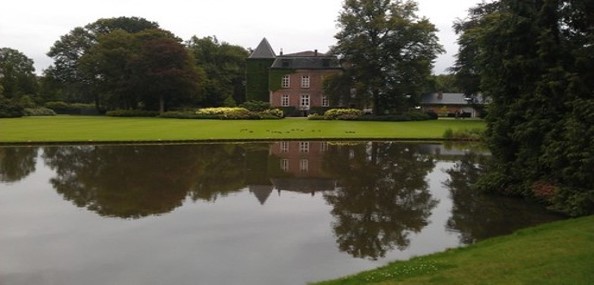
Het Loo is a farm that has long used agroforestry practices since the 19th century.
Water had lots of calcium in it, due to a previous factory and there was flooding in the spring. The land owner recognized that agroforestry would be a great way to prevent this flooding. Although the agroforestry had other benefits, this was the main reason.
One of the key successes after the implementation It doesn’t flood anymore. Agroforestry often prevents erosion, and this is a great example of this.
One of the key successes after the implementation It doesn’t flood anymore. Agroforestry often prevents erosion, and this is a great example of this.
- Preservation, interesting flowers, grazing, conservations have all come about due to the use of agroforestry measures.
- The land is better able to be maintained, there is more grazing material for the animals, and the new flowers which have populated the area making for a very pleasant visual appeal.
The land owner met with people and they share information about agroforestry with each other at multiple meetings. A key element of training was making sure that a plan was in place and that the greater picture was evaluated before starting.
Description of used technics during establishing of agroforestry systems
One notable description of a technique was the intentional usage of a 23 metre distance between the poplar trees, allowing the 22 meter wide vehicles to pass. By planning ahead, the land owner is able to keep from having to purchase new equipment that would not fit if they used a smaller setting between the poplar trees.
Threats/Challenges
Description of used technics during establishing of agroforestry systems
One notable description of a technique was the intentional usage of a 23 metre distance between the poplar trees, allowing the 22 meter wide vehicles to pass. By planning ahead, the land owner is able to keep from having to purchase new equipment that would not fit if they used a smaller setting between the poplar trees.
Threats/Challenges
- One challenge is that the landowners was not eligible for subsidies, because many of the agroforestry measures he engaged in predated the subsidies.
- They haven’t expanded because the area is presently pretty nice, with a good mixture of non-intensive agriculture, some flower mixes, and a 6 metre butterfly bank.
Be sure to share knowledge and work with others because agroforestry is a growing topic and one of the best ways to learn about it is from other practitioners of it.
Lesson learned from the case study: It was mentioned in an interview with the landowner that agroforestry has been going on for a long time, even though it hasn’t always been referred to as agroforestry. This is reflected in Agfosy research that shows that “agroforestry” in one way or another has been going on since before the Greeks and Romans.
Future plans It’s important to exchange knowledge and learn from each other because that is how we expand and get better.
Lesson learned from the case study: It was mentioned in an interview with the landowner that agroforestry has been going on for a long time, even though it hasn’t always been referred to as agroforestry. This is reflected in Agfosy research that shows that “agroforestry” in one way or another has been going on since before the Greeks and Romans.
Future plans It’s important to exchange knowledge and learn from each other because that is how we expand and get better.
Site visits from others, meeting with the agroforestry society, and attending hearings are all very important ways of improving agroforestry.
Farmer recommendation:
“Discuss the issue, and realize some lands are better than others for agroforestry.”


