


Individual features
Pruning timber trees in agroforestry systems
Download PDF
How to shape the tree for a better resistance, growth and commercialization
dav
sdr
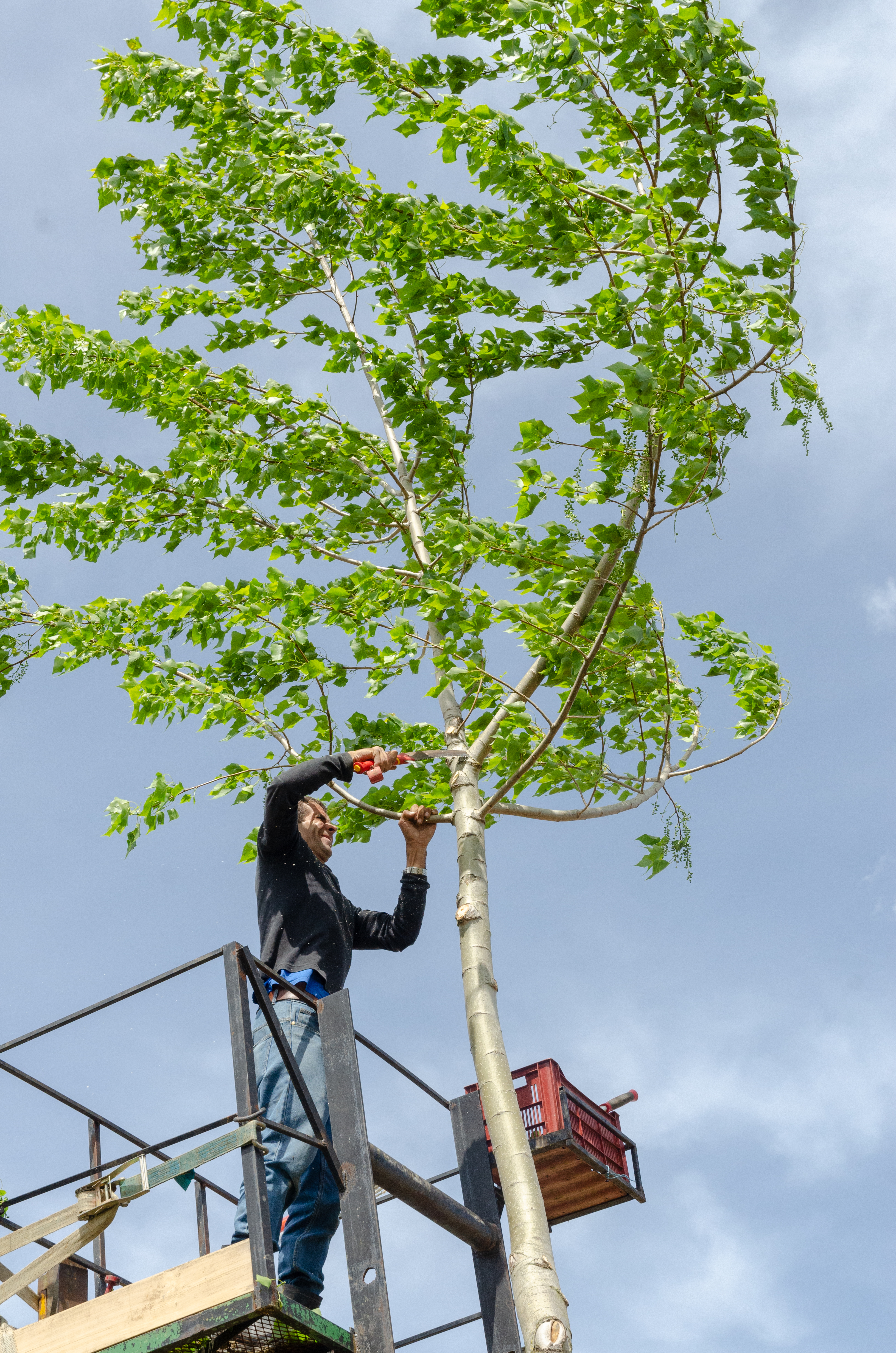
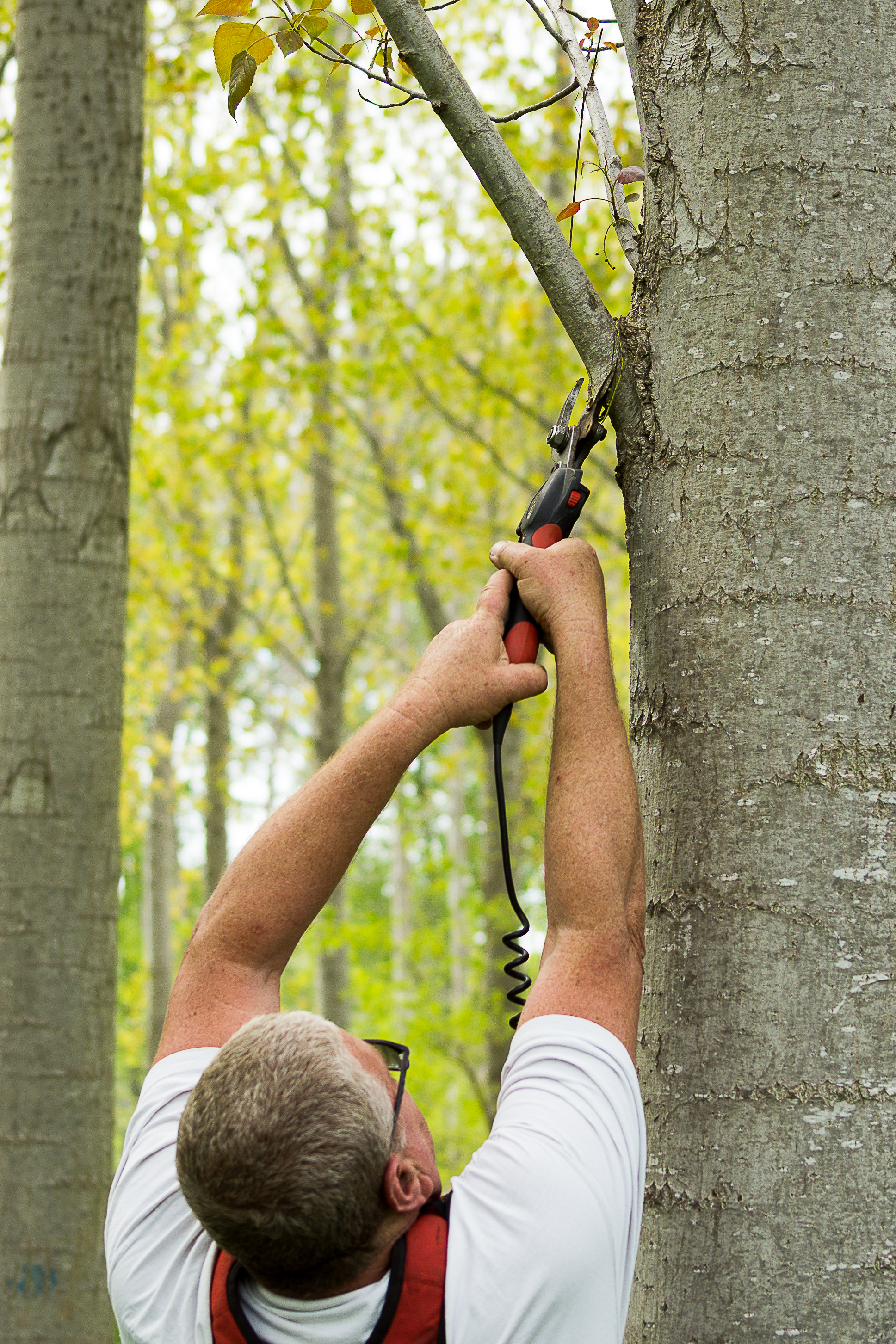
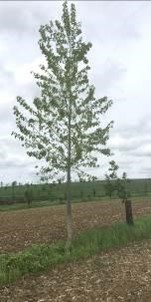
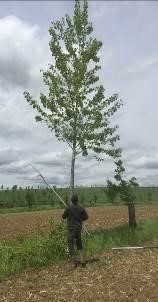
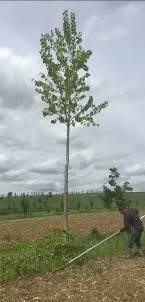
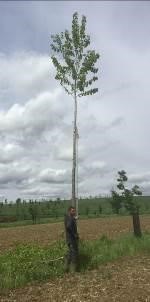
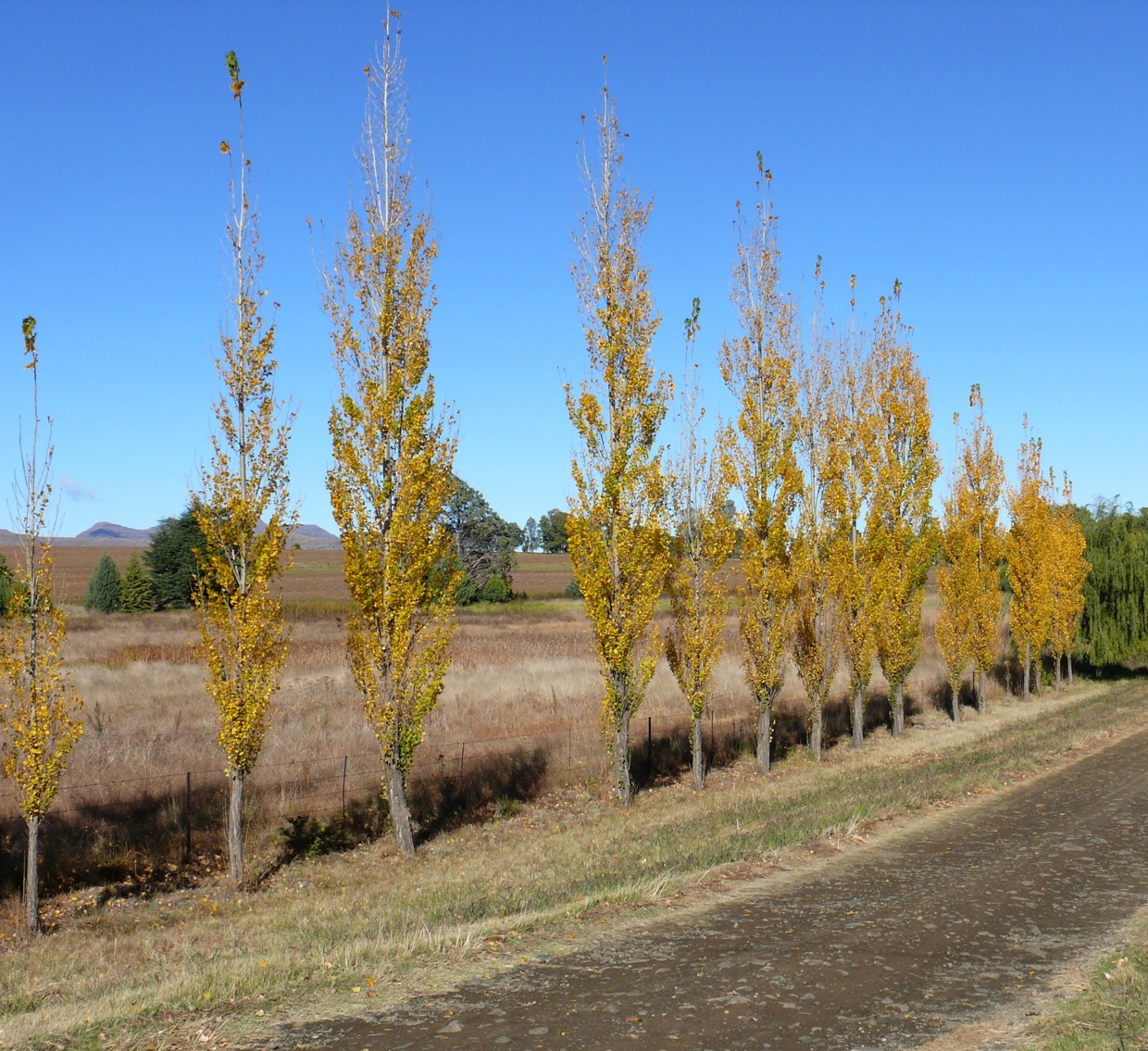
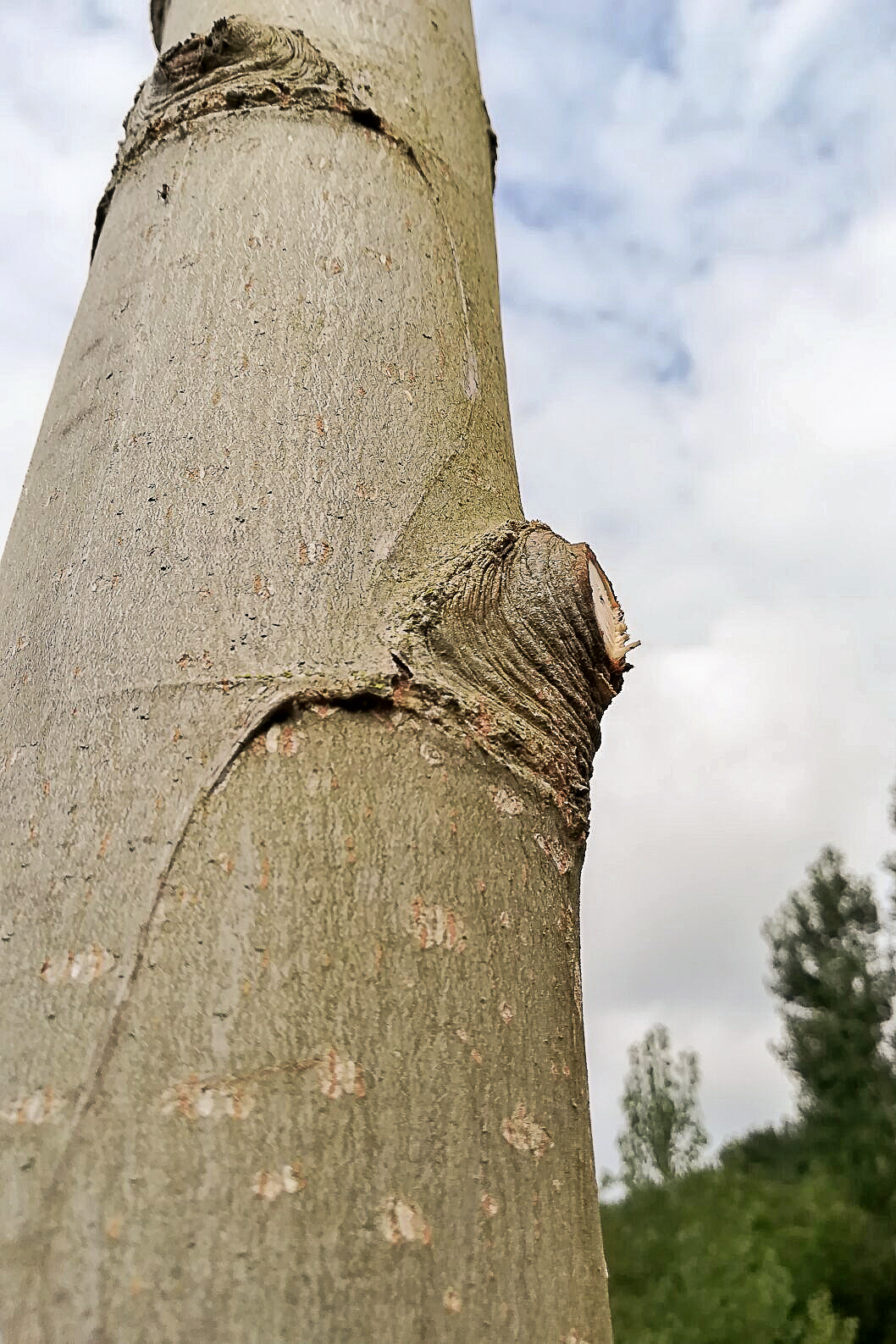
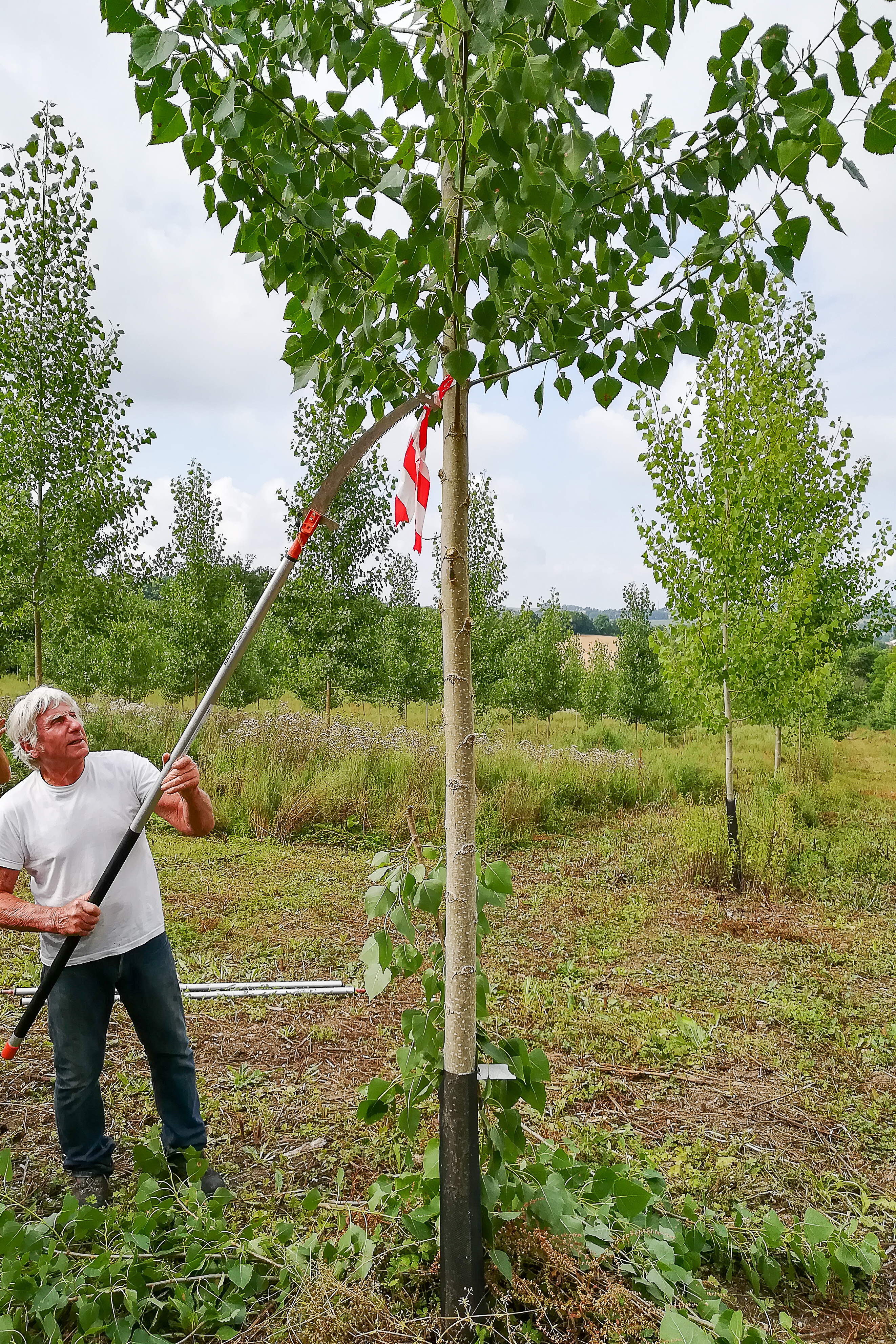
The shape pruning of timber trees in agroforestry systems is oriented toward giving the tree a lighter and more efficient shape. It will give the tree more resilience to wind, will facilitate the passage of agricultural machinery and eventually will produce a knotless wood, sought out by wood industries.
Shape pruning must aim at relieving the tree of:
- A fork at the top that will eventually weaken the tree structure. Keep the most vigorous and straightforward branch.
- Acute branches that grow with an angle of less than 30° from the main stem. These branches grow quickly and threaten to overtake the apical domination, becoming the main stem and moving to an imbalanced shape.
- Overgrown branches diameter which is bigger than the neighboring branches or exceeds 2,5 to 3cm.
For early pruning and low branches, several manual equipment can be used depending on the diameter of the targeted branch:
- hand pruners (branch Ø < 1.5 cm) – 50 to 100 €
- lopping shears (Ø < 3 cm) – 50 to 200 €
- pruning saw (3 ≤ Ø ≤ 10 cm) – 30 to 100 €
Shape pruning on living branches must never be done during bud break (from swelling of the buds to the complete development of the first leaves), nor while the sap flow is going downwards (from the end of August till the shedding of leaves). This will avoid depleting the tree’s resources. The most adequate time of the year in France for the shape pruning is between 15 of July to the 15 of September for example (for an optimal wound sealing).
As it has been said above, perpetual vigilance with gradual pruning operations is the best periodicity. However, because of a lack of organization, a pruning operation on all the trees every 2 or 3 years is the most common practice among farmers.
The time needed for shape pruning will vary extensively depending on the periodicity of the operations. For the shape pruning of 100 poplar trees, here are the costs involved, two scenarios are presented: if the work is realized by the farmer himself (with a cost/hour of 1,5x the minimum wage) or if it is outsourced to an external company:
| Item | Time needed /100 trees (h) | Total cost for 100 trees | Total cost per tree | Cost if outsourced |
| Year 2 pruning | 9 | 135 € | 1,35 € | 1,40 € |
| Year 5 pruning | 10 | 150 € | 1,50 € | 1,40 € |
| Year 8 pruning | 12,5 | 188 € | 1,88 € | 2,30 € |
| Year 14 last pruning | 25 | 375 € | 3,75 € | 2,30 € |
| TOTAL | 56,5 | 848 € | 8,48 € | 7,40 € |
The economic data given above comes from the specific case of the poplar in a silvoarable design, an agroforestry system that is developed in France and described in a publication by the French Association for Agroforestry.
We can describe the case of Christian Valette, a farmer in the South-West of France. He planted a silvoarable plot of 28ha with a density of 100 poplars/ha, and a 7x14m spacing. He cultivates crops such as wheat, rapeseed and corn. He practices pruning once every two years by himself and with his employees. The total cost of his Poplar production (considering all costs of planting and pruning) reached 42,000 €, meaning 15 €/tree.
After his 1st project, Christian Valette concluded that a pruning every two years is not sufficient to obtain perfect straight trunks for commercialization. For his next poplar agroforestry plantation, he plans to undertake a round of pruning each year to reach better prices and return on investment.
 | Léo Godard, Fabien Balaguer Association Française d’Agroforesterie 44 Avenue Victor Hugo, 32000 Auch, France leo.godard@agroforesterie.fr |


